




Before you think about sports betting, it helps to understand how betting odds actually work. Odds are the foundation of every wager – they tell you how much you stand to win and how likely a given outcome is. Whether you are new to sports betting or sharpening your strategy, this guide covers decimal odds, probability, and implied probability in simple terms so you can bet with more confidence.
What Are Betting Odds?
Decimal odds – the standard format across Europe; they show the total return you receive for every unit staked, including your original stake.
For example, if you place a 10 EUR bet at odds of 2.00, your total return on a win is 20 EUR (10 EUR stake + 10 EUR profit).
The relationship between odds and likelihood is logical: the higher the odds, the less likely the bookmaker considers that outcome. And lower odds indicate higher expected probability. A favourite might sit at 1.30, while a long shot could be priced at 8.00 or above.
What Is Probability in Sports Betting?
Probability expresses the chance of an event happening as a percentage.
If a team has a 50% chance of winning, a fair decimal price would be around 2.00. If the chance drops to 25%, the fair price rises to roughly 4.00.
In practice, a bookmaker adds a margin (also called the overround or “vig”) on top of the true mathematical probability. That margin is how the operator earns revenue, and it means the odds you see will always be slightly lower than a perfectly fair price.
What Is Implied Probability?
Implied probability takes the odds offered by a bookmaker and converts them back into a percentage. This tells you how likely the bookmaker considers a particular outcome.
The formula for decimal odds is simple:
Implied probability (%) = (1 / decimal odds) x 100
Here are a few quick examples:
| Decimal Odds | Implied Probability |
|---|---|
| 2.00 | 50.0% |
| 3.00 | 33.3% |
| 1.50 | 66.7% |
So when you see odds of 1.50 on a football match, the bookmaker’s pricing suggests that outcome has a 66.7% chance of happening.
Why Does Implied Probability Matter?
Understanding implied probability helps you make smarter decisions. When you form your own view on how likely an outcome is, you can compare it with the bookmaker’s assessment.
For example, suppose a bookmaker prices the home team at 2.50, implying a 40% win probability. If your own research suggests the real probability is closer to 50%, that gap could represent a value bet at the FIFA World Cup 2026 or any other event – a wager where the potential return outweighs the perceived risk.
Implied probability also gives you a quick sense check. If the numbers do not feel right for a matchup, that is a signal to dig deeper before placing your bet. Over time, this kind of thinking becomes second nature. The best way to develop it is to practise regularly and start reading the percentages without reaching for a calculator.
Why Do Betting Odds Change?
Odds are not fixed. Bookmakers adjust them continuously based on new information, and several factors can shift the price on any market:
- Player injuries or late squad changes can move odds in either direction.
- Team form and momentum heading into a fixture influence how the market views each side.
- Betting volume matters too – when many bettors back one outcome, the bookmaker may shorten its odds to balance exposure across the market.
Because of these shifts, the odds on the same event can look different in the morning compared to kick-off. Timing your bet is part of the skill.
It is also worth remembering that odds reflect an estimate, not a guarantee. They are built on statistics, analysis, and market movement. A strong favourite can still lose, and an outsider can still win. That is what makes sports compelling, and why your own knowledge and judgement always matter.
Beyond Sport: Fun Facts About Betting Markets
One last thing worth knowing: betting odds do not have to be limited to sport. In theory, a bookmaker can price up almost anything once the outcome is measurable.
That is why you sometimes see markets pop up around the calendar, like will it rain on Midsummer’s Day in June, or will Christmas bring snow? Some operators have even offered odds on truly outlandish propositions just for entertainment value. These markets are a reminder that odds are simply a way to express opinion as a number.
Putting odds knowledge to work? See our 2026 FIFA World Cup betting guide for tournament-specific markets.
How to Bet Responsibly During the World Cup 2026
The 2026 FIFA World Cup is the perfect stage to experience sports betting at its best. More matches, more markets, and more moments worth talking about. Here is how to keep it enjoyable throughout the tournament:
- Stick to your budget. Decide what you are comfortable spending before the tournament starts and treat it as entertainment money.
- Never chase losses. A bad result on one match should not push you into rushing a bet on the next one.
- Analyse each match on its own merits. Form, matchups, and conditions matter more than gut feeling.
- Keep emotions in check. Betting on your own national team can cloud your judgement – be honest with yourself about what the data says.
- Enjoy football first. The tournament only comes around once every four years, the atmosphere and the stories are what you will remember.
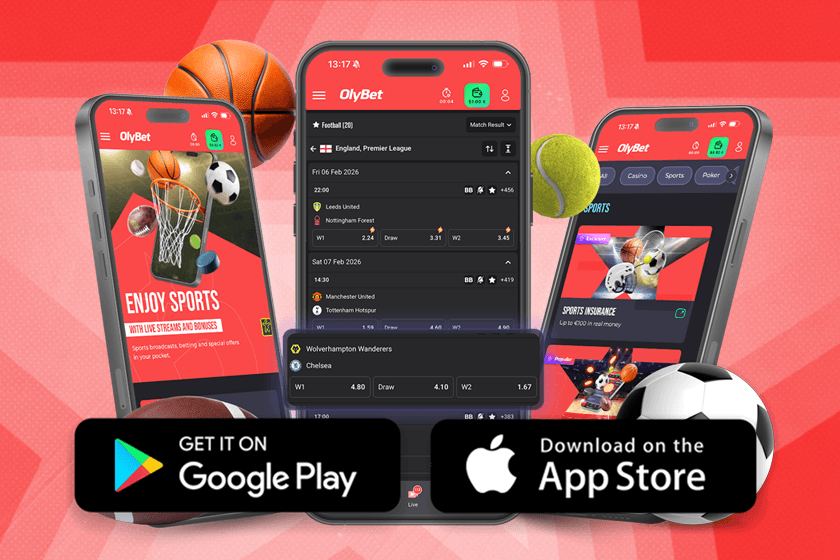
- Use the OlyBet mobile app to keep control of your bets and set personal limits on the go.
A solid strategy, analysis, and a responsible approach turn every match day into a joy. Keep an eye on OlyBet for special World Cup 2026 offers throughout the tournament. You will not want to miss them.